

Plastic Waste Management Market Set to Reach US$ 45.2 Billion by 2033 Key Drivers, Trends, and Segmentation Insights
Plastic Waste Management Market
Europe holds 24% the Plastic Waste Management market, driven by strict circular economy and EPR legislation, with recycling targets rising toward 70% by 2030
LONDON, LONDON, UNITED KINGDOM, February 11, 2026 /EINPresswire.com/ -- The plastic waste management market is becoming central to global sustainability strategies as governments, corporations, and communities work to reduce environmental footprints. According to Persistence Market Research, the market is expected to be valued at US$ 34.6 billion in 2026 and is projected to reach US$ 45.2 billion by 2033, expanding at a CAGR of 3.9% during the forecast period. Increasing regulatory pressure, extended producer responsibility programs, and advances in recycling technologies are shaping the direction of industry investments.
Get Your FREE Sample Report Instantly – Click Now: https://www.persistencemarketresearch.com/samples/34072
Rising Regulatory Pressure and Circular Economy Goals
Governments across the world are introducing stringent policies aimed at minimizing landfill dependency and improving recycling rates. Bans on single-use plastics, mandatory recycled content targets, and landfill taxes are compelling municipalities and industries to adopt structured waste management systems. These regulatory frameworks provide long-term visibility for investors and infrastructure developers.
At the same time, the circular economy concept is reshaping the value chain. Instead of treating plastic as waste, authorities increasingly consider it a resource that can be reintroduced into manufacturing cycles. This shift encourages material recovery facilities, chemical recyclers, and waste collectors to expand capabilities while fostering collaboration between packaging producers and recyclers.
Growing Volumes of Municipal and Industrial Plastic Waste
Urbanization, population growth, and rising consumption are dramatically increasing plastic waste generation. Municipal bodies face mounting pressure to improve collection efficiency and prevent leakage into oceans and rivers. Advanced segregation, digital tracking, and public awareness campaigns are becoming essential tools.
Industrial waste streams are equally significant, especially from manufacturing, automotive, and construction activities. These sources often generate cleaner, high-volume plastic scrap, making them attractive for recyclers seeking better yields. Structured agreements between industries and recycling firms are strengthening supply security and supporting long-term market growth.
Technology Advancements Transforming Recycling Efficiency
Innovation is one of the strongest growth drivers in the plastic waste management market. Automation, artificial intelligence, and optical sorting systems are improving identification accuracy for different polymer types. Higher purity levels translate into better recyclate quality and improved resale value.
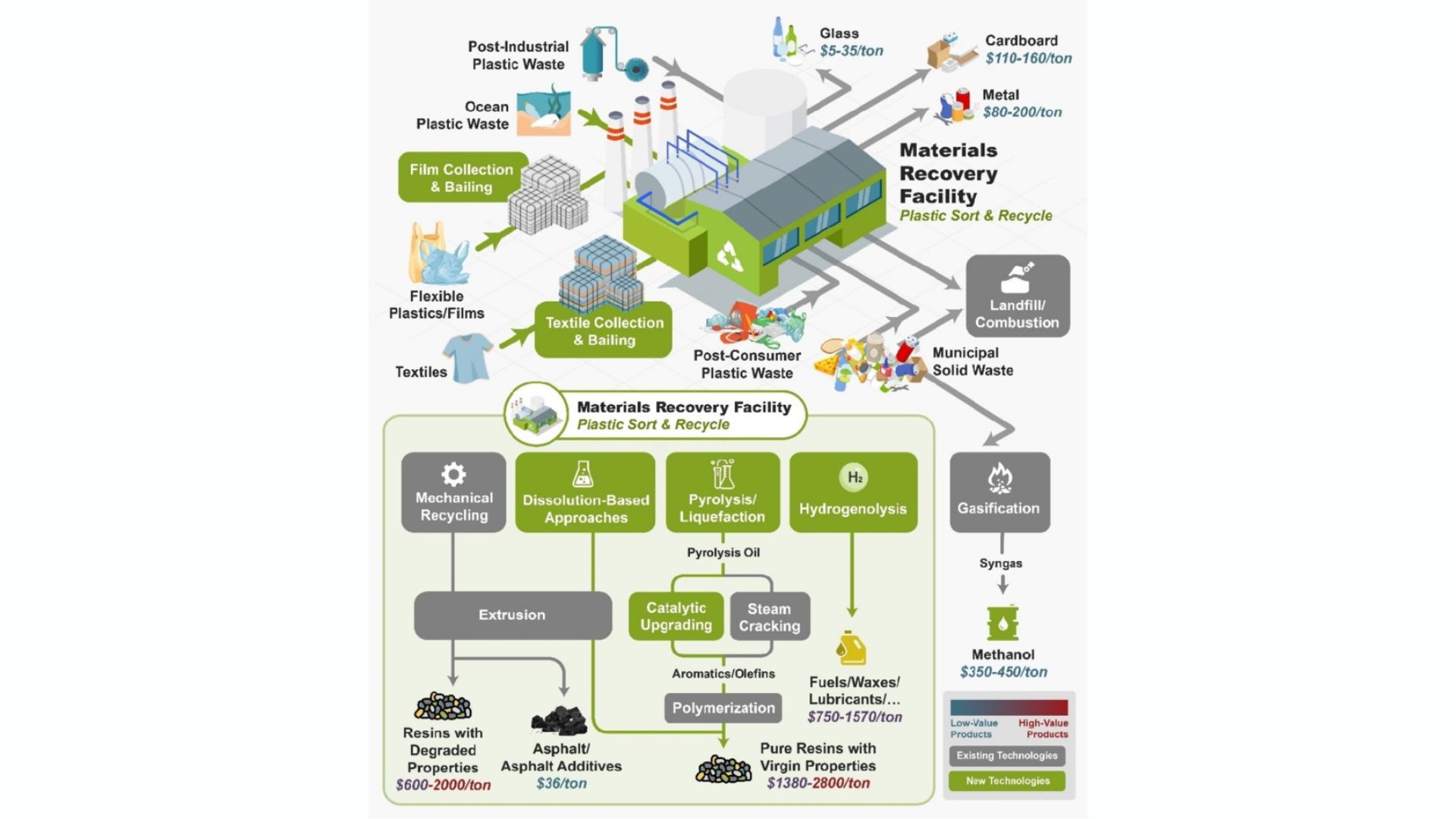
Chemical recycling technologies are also gaining momentum as they can process mixed or contaminated plastics that are difficult to treat mechanically. By converting waste into feedstock or fuels, these solutions expand recovery possibilities. Although capital intensive, scaling of such technologies is expected to redefine the economics of plastic waste utilization.
Get a Customized Market View in One Click: https://www.persistencemarketresearch.com/request-customization/34072
Expanding Role of End-use Industries in Demand Creation
Recycled plastics are increasingly used in packaging, textiles, automotive components, and consumer electronics. Brands are making public commitments to incorporate post-consumer resin, stimulating demand for reliable waste management systems. This pull from downstream industries is critical for maintaining stable pricing structures.
Moreover, green procurement policies and eco-labeling initiatives are influencing buying decisions. Companies able to demonstrate traceability from collection to reuse are gaining competitive advantages. As sustainability reporting becomes mandatory in many regions, end users will continue strengthening partnerships with recyclers.
Market Segmentation
By Plastic Waste
• Municipal Waste
• Industrial Waste
By Polymer Type
• Polyethylene Terephthalate (PET)
• High-Density Polyethylene (HDPE)
• Low-Density Polyethylene (LDPE & LLDPE)
• Polypropylene (PP)
• Polyvinyl Chloride (PVC)
• Polystyrene (PS & EPS)
• Misc.
By Processing Treatment
• Collection & Sorting
• Mechanical Recycling
• Chemical Recycling
• Energy Recovery
• Landfilling
• Misc.
By End Use Application
• Packaging
• Construction & Infrastructure
• Automotive & Transportation
• Textiles & Clothing
• Consumer Goods & Electronics
• Misc.
By Region
• North America
• Europe
• East Asia
• South Asia Oceania
• Latin America
• Middle East & Africa
Infrastructure Development in Emerging Economies
Developing regions are investing heavily in formal waste collection and recycling networks. Rapid urban expansion has exposed weaknesses in traditional disposal practices, prompting authorities to modernize systems. International funding, public-private partnerships, and climate initiatives are accelerating infrastructure deployment.
Improved logistics and local processing capabilities reduce dependence on exporting waste, which has become increasingly restricted. As domestic treatment capacity grows, new business opportunities emerge for technology suppliers and service providers, strengthening regional markets.
Environmental Awareness and Corporate Responsibility
Public concern about marine litter and microplastics has changed consumer expectations. Communities demand transparency on how waste is handled and recycled. This has pushed companies to redesign packaging, support take-back programs, and finance recovery operations.
Corporate responsibility strategies are evolving beyond compliance toward measurable environmental outcomes. Investment in waste management is now linked with brand reputation, investor confidence, and long-term resilience. As sustainability becomes integral to corporate governance, market demand for efficient plastic recovery services will rise steadily.
Energy Recovery and Alternative Treatment Pathways
While recycling remains the priority, energy recovery solutions continue to play a complementary role, especially for non-recyclable plastics. Waste-to-energy plants reduce landfill pressure and contribute to local energy supplies. Technological improvements are helping lower emissions and increase conversion efficiency.
However, debate persists regarding environmental trade-offs. Policymakers are working to balance recycling targets with pragmatic disposal needs. Future strategies are likely to integrate multiple approaches, ensuring optimal resource utilization while minimizing ecological impact.
For In-Depth Competitive Analysis, Buy Now: https://www.persistencemarketresearch.com/checkout/34072
Company Insights
Prominent companies operating in the global plastic waste management market include:
✦ Waste Management Inc.
✦ SUEZ Group
✦ Veolia Environment S.A.
✦ Biffa PLC
✦ Clean Harbors Inc.
✦ Covanta Holdings Corporation
✦ Hitachi Zosen Corporation
✦ Remondis AG & Co. Kg
✦ Republic Services Inc.
✦ Stericycle Inc.
✦ ALBA Group
Future Outlook and Investment Priorities
Looking ahead, the market will be defined by scalability, material traceability, and profitability of recycled outputs. Integration of digital tools for route optimization, blockchain-enabled tracking, and robotics in sorting facilities will enhance transparency and reduce operational costs.
As the industry progresses toward the projected US$ 45.2 billion valuation by 2033, collaboration across the value chain will be vital. Waste generators, recyclers, policymakers, and manufacturers must align objectives to ensure plastics remain within productive cycles rather than entering the environment.
Explore the Latest Trending Research Reports:
• Xenon Gas Market
• Green Power Transformer Market
Ajaykumar Patil
Persistence Market Research
+1 6468786329
email us here
Visit us on social media:
LinkedIn
Instagram
Facebook
YouTube
X
Legal Disclaimer:
EIN Presswire provides this news content "as is" without warranty of any kind. We do not accept any responsibility or liability for the accuracy, content, images, videos, licenses, completeness, legality, or reliability of the information contained in this article. If you have any complaints or copyright issues related to this article, kindly contact the author above.
