FOREST Launches Sustainable Wood-Plastic Flooring Solutions to Advance Forest Conservation and Cost-Efficiency
LINYI, SHANDONG, CHINA, April 17, 2026 /EINPresswire.com/ -- As the global industrial landscape pivots toward carbon neutrality and ecological preservation, the demand for high-performance, sustainable building materials has seen unprecedented growth. Wood-plastic composite (WPC) materials have emerged as a critical alternative to traditional timber, addressing both the scarcity of natural resources and the need for durable, cost-effective construction solutions. Within this context, Linyi Forest International Trading Co., Ltd. has expanded its operations to meet the rising international demand for advanced decorative materials, emphasizing a circular economy model that integrates manufacturing excellence with global distribution.
The environmental urgency driving this transition is supported by alarming statistics. Current data indicates that global forests are disappearing at a rate equivalent to 36 football fields per minute. This rapid loss of biodiversity and carbon-sequestering vegetation has forced a reevaluation of the building materials industry. Wood-plastic composites, which utilize a synergy of industrial wood chips and recycled plastics, are at the forefront of a green revolution that is fundamentally changing how human habitats are constructed and decorated.
The Scientific Composition of Wood-Plastic Materials
Wood-Plastic Composite (WPC) is an engineered material that utilizes a sophisticated blend of organic and synthetic components. The production process involves mixing wood fibers—often salvaged from agricultural and forestry waste such as wood powder, bamboo powder, or straw—with thermoplastic polymers, primarily polyethylene (PE), polypropylene (PP), or polyvinyl chloride (PVC). Through a process of high-temperature extrusion, these raw materials are fused into a dense, moisture-resistant product.
The resulting material mimics the aesthetic qualities of natural wood grain and texture while eliminating the structural inconsistencies inherent in organic timber. Because the extrusion process is highly controlled, the material possesses a level of uniformity that prevents the occurrence of knots, splinters, and irregular grain patterns. This consistency is a primary reason why WPC has become a preferred material for large-scale architectural projects that require high precision and long-term aesthetic stability.
Environmental Comparison: Traditional Timber vs. WPC
The ecological footprint of the traditional wood industry is a primary driver behind the adoption of composites. The global annual consumption of wood results in the deforestation of approximately two million hectares of mature forests. Beyond the loss of trees, the industrial chain required to process raw timber is resource-intensive. Producing one cubic meter of traditional wood typically requires three tons of water and approximately 200 kWh of electricity, while generating 0.8 tons of carbon dioxide emissions.
The development of wood-plastic materials has significantly altered this environmental equation. Experimental data from organizations such as the China National Building Material Group indicates that WPC products synthesized with a 50% wood powder ratio have carbon emissions that are roughly one-third of those associated with solid wood. Furthermore, the manufacturing of these composites reduces water resource consumption by approximately 70%. These metrics highlight why WPC is increasingly classified as a "green" building material within international sustainability frameworks.
Performance Attributes and Lifecycle Advantages
The preference for wood-plastic materials over solid wood is rooted in several technical performance advantages that impact both the longevity of a structure and its cumulative maintenance costs.
1. Environmental Performance and Resource Recovery
WPC manufacturing represents a successful model of "turning waste into treasure." By utilizing agricultural and forestry by-products and recycled plastics, the production process reduces the overall burden on landfills and natural forests. Furthermore, WPC is entirely recyclable; at the end of its functional lifecycle, the material can be crushed and remanufactured into new products, achieving the goals of a circular economy.
2. Structural Resilience and Biological Resistance
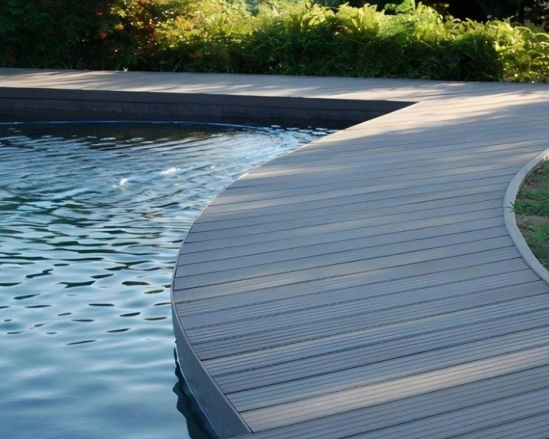
Unlike traditional timber, which is highly susceptible to moisture absorption, swelling, and subsequent rotting, the plastic component within WPC provides a non-porous barrier. This makes the material naturally moisture-resistant and immune to the structural deformation often caused by humidity or direct contact with water. Additionally, the synthetic elements serve as a deterrent to pest infestations, such as termites, which frequently compromise the integrity of solid wood structures.
3. Maintenance and Economic Efficiency
Traditional wood requires intensive ongoing maintenance, including regular sanding, staining, and the application of anti-corrosion treatments to prevent decay. These processes not only involve significant labor costs but also introduce chemical pollutants into the environment. WPC materials, by contrast, require no painting or sanding. While the initial procurement cost of composite materials may be slightly higher than some raw timbers, the elimination of maintenance expenses and the extended service life make the overall investment significantly more economical.
Manufacturing Infrastructure in Linyi’s Industrial Hub
The production of these advanced materials is centered in Linyi City, Shandong Province, a region globally recognized for its timber and decorative material industry. The Linyi Forest Decoration Factory, established in 2018, serves as a major manufacturing node in this industrial ecosystem. Located in Yitang Town, Lanshan District, the facility spans 16,000 square meters and is equipped with advanced extrusion lines capable of high-volume output.
The facility employs 50 specialized workers and maintains a production capacity of one hundred 40ft containers per month. This scale of operation allows for the consistent supply of various materials to international markets. To facilitate seamless global trade, Linyi Forest International Trading Co., Ltd. was established in 2022, providing a dedicated export framework for the factory’s product range.
The product portfolio managed by the company is extensive, covering both indoor and outdoor decorative needs. These include:
WPC Wall Panels and Decking: Durable solutions for exterior cladding and outdoor flooring.
SPC (Stone Plastic Composite) Flooring: High-density, rigid-core flooring known for its waterproof and fire-resistant properties.
PVC Foam Board and PVC Marble Sheets: Lightweight, aesthetic alternatives for interior wall decoration.
Acoustic Panels: Specialized materials designed for sound management in commercial environments.
PU Stone and Flexible Stone: Innovative cladding options that replicate natural stone textures with significantly lower weight and easier installation protocols.
One-Stop Procurement and Logistics Excellence
The complexity of modern construction projects often requires the sourcing of multiple components and accessories. Linyi Forest International Trading Co., Ltd. has implemented a one-stop purchase service model to address this logistical challenge. This model ensures that all necessary accessories for WPC and SPC products are matched and supplied concurrently, reducing the likelihood of compatibility issues during installation.
The presence of a large-scale warehouse facility at the factory allows for the consolidation of various building materials. International clients purchasing multiple product lines, such as flooring, wall panels, and foam boards, can have these items loaded together in a single shipment. This integrated logistical approach minimizes shipping costs and streamlines the customs and delivery process for global buyers. Through OEM (Original Equipment Manufacturer) and ODM (Original Design Manufacturer) services, the company provides tailored solutions that align with specific market trends and fashion-forward designs.
Conclusion
The evolution of the decorative materials industry is increasingly defined by the balance between aesthetic appeal, structural performance, and environmental responsibility. As wood-plastic composites and stone-based materials like SPC continue to capture global market share, the transition away from resource-heavy traditional timber is accelerating. The industrial capacity demonstrated in hubs like Linyi, supported by specialized manufacturing and trading entities, provides the necessary infrastructure to sustain this green revolution. By prioritizing circular economy principles, moisture resistance, and low-maintenance designs, wood-plastic solutions offer a viable path toward sustainable construction without compromising on quality or economic feasibility.
For professional decorative material specifications and further information regarding sustainable indoor and outdoor solutions, additional details are available via the official website: https://www.linyiforestdeco.com/
The environmental urgency driving this transition is supported by alarming statistics. Current data indicates that global forests are disappearing at a rate equivalent to 36 football fields per minute. This rapid loss of biodiversity and carbon-sequestering vegetation has forced a reevaluation of the building materials industry. Wood-plastic composites, which utilize a synergy of industrial wood chips and recycled plastics, are at the forefront of a green revolution that is fundamentally changing how human habitats are constructed and decorated.
The Scientific Composition of Wood-Plastic Materials
Wood-Plastic Composite (WPC) is an engineered material that utilizes a sophisticated blend of organic and synthetic components. The production process involves mixing wood fibers—often salvaged from agricultural and forestry waste such as wood powder, bamboo powder, or straw—with thermoplastic polymers, primarily polyethylene (PE), polypropylene (PP), or polyvinyl chloride (PVC). Through a process of high-temperature extrusion, these raw materials are fused into a dense, moisture-resistant product.
The resulting material mimics the aesthetic qualities of natural wood grain and texture while eliminating the structural inconsistencies inherent in organic timber. Because the extrusion process is highly controlled, the material possesses a level of uniformity that prevents the occurrence of knots, splinters, and irregular grain patterns. This consistency is a primary reason why WPC has become a preferred material for large-scale architectural projects that require high precision and long-term aesthetic stability.
Environmental Comparison: Traditional Timber vs. WPC
The ecological footprint of the traditional wood industry is a primary driver behind the adoption of composites. The global annual consumption of wood results in the deforestation of approximately two million hectares of mature forests. Beyond the loss of trees, the industrial chain required to process raw timber is resource-intensive. Producing one cubic meter of traditional wood typically requires three tons of water and approximately 200 kWh of electricity, while generating 0.8 tons of carbon dioxide emissions.
The development of wood-plastic materials has significantly altered this environmental equation. Experimental data from organizations such as the China National Building Material Group indicates that WPC products synthesized with a 50% wood powder ratio have carbon emissions that are roughly one-third of those associated with solid wood. Furthermore, the manufacturing of these composites reduces water resource consumption by approximately 70%. These metrics highlight why WPC is increasingly classified as a "green" building material within international sustainability frameworks.
Performance Attributes and Lifecycle Advantages
The preference for wood-plastic materials over solid wood is rooted in several technical performance advantages that impact both the longevity of a structure and its cumulative maintenance costs.
1. Environmental Performance and Resource Recovery
WPC manufacturing represents a successful model of "turning waste into treasure." By utilizing agricultural and forestry by-products and recycled plastics, the production process reduces the overall burden on landfills and natural forests. Furthermore, WPC is entirely recyclable; at the end of its functional lifecycle, the material can be crushed and remanufactured into new products, achieving the goals of a circular economy.
2. Structural Resilience and Biological Resistance
Unlike traditional timber, which is highly susceptible to moisture absorption, swelling, and subsequent rotting, the plastic component within WPC provides a non-porous barrier. This makes the material naturally moisture-resistant and immune to the structural deformation often caused by humidity or direct contact with water. Additionally, the synthetic elements serve as a deterrent to pest infestations, such as termites, which frequently compromise the integrity of solid wood structures.
3. Maintenance and Economic Efficiency
Traditional wood requires intensive ongoing maintenance, including regular sanding, staining, and the application of anti-corrosion treatments to prevent decay. These processes not only involve significant labor costs but also introduce chemical pollutants into the environment. WPC materials, by contrast, require no painting or sanding. While the initial procurement cost of composite materials may be slightly higher than some raw timbers, the elimination of maintenance expenses and the extended service life make the overall investment significantly more economical.
Manufacturing Infrastructure in Linyi’s Industrial Hub
The production of these advanced materials is centered in Linyi City, Shandong Province, a region globally recognized for its timber and decorative material industry. The Linyi Forest Decoration Factory, established in 2018, serves as a major manufacturing node in this industrial ecosystem. Located in Yitang Town, Lanshan District, the facility spans 16,000 square meters and is equipped with advanced extrusion lines capable of high-volume output.
The facility employs 50 specialized workers and maintains a production capacity of one hundred 40ft containers per month. This scale of operation allows for the consistent supply of various materials to international markets. To facilitate seamless global trade, Linyi Forest International Trading Co., Ltd. was established in 2022, providing a dedicated export framework for the factory’s product range.
The product portfolio managed by the company is extensive, covering both indoor and outdoor decorative needs. These include:
WPC Wall Panels and Decking: Durable solutions for exterior cladding and outdoor flooring.
SPC (Stone Plastic Composite) Flooring: High-density, rigid-core flooring known for its waterproof and fire-resistant properties.
PVC Foam Board and PVC Marble Sheets: Lightweight, aesthetic alternatives for interior wall decoration.
Acoustic Panels: Specialized materials designed for sound management in commercial environments.
PU Stone and Flexible Stone: Innovative cladding options that replicate natural stone textures with significantly lower weight and easier installation protocols.
One-Stop Procurement and Logistics Excellence
The complexity of modern construction projects often requires the sourcing of multiple components and accessories. Linyi Forest International Trading Co., Ltd. has implemented a one-stop purchase service model to address this logistical challenge. This model ensures that all necessary accessories for WPC and SPC products are matched and supplied concurrently, reducing the likelihood of compatibility issues during installation.
The presence of a large-scale warehouse facility at the factory allows for the consolidation of various building materials. International clients purchasing multiple product lines, such as flooring, wall panels, and foam boards, can have these items loaded together in a single shipment. This integrated logistical approach minimizes shipping costs and streamlines the customs and delivery process for global buyers. Through OEM (Original Equipment Manufacturer) and ODM (Original Design Manufacturer) services, the company provides tailored solutions that align with specific market trends and fashion-forward designs.
Conclusion
The evolution of the decorative materials industry is increasingly defined by the balance between aesthetic appeal, structural performance, and environmental responsibility. As wood-plastic composites and stone-based materials like SPC continue to capture global market share, the transition away from resource-heavy traditional timber is accelerating. The industrial capacity demonstrated in hubs like Linyi, supported by specialized manufacturing and trading entities, provides the necessary infrastructure to sustain this green revolution. By prioritizing circular economy principles, moisture resistance, and low-maintenance designs, wood-plastic solutions offer a viable path toward sustainable construction without compromising on quality or economic feasibility.
For professional decorative material specifications and further information regarding sustainable indoor and outdoor solutions, additional details are available via the official website: https://www.linyiforestdeco.com/
Linyi Forest International Trading Co., Ltd.
+86 15065960733
info@linyiforest.com
Legal Disclaimer:
EIN Presswire provides this news content "as is" without warranty of any kind. We do not accept any responsibility or liability for the accuracy, content, images, videos, licenses, completeness, legality, or reliability of the information contained in this article. If you have any complaints or copyright issues related to this article, kindly contact the author above.

