
An important Nikola Tesla signed holograph page from a scientific article he wrote in 1907 will be auctioned April 30th
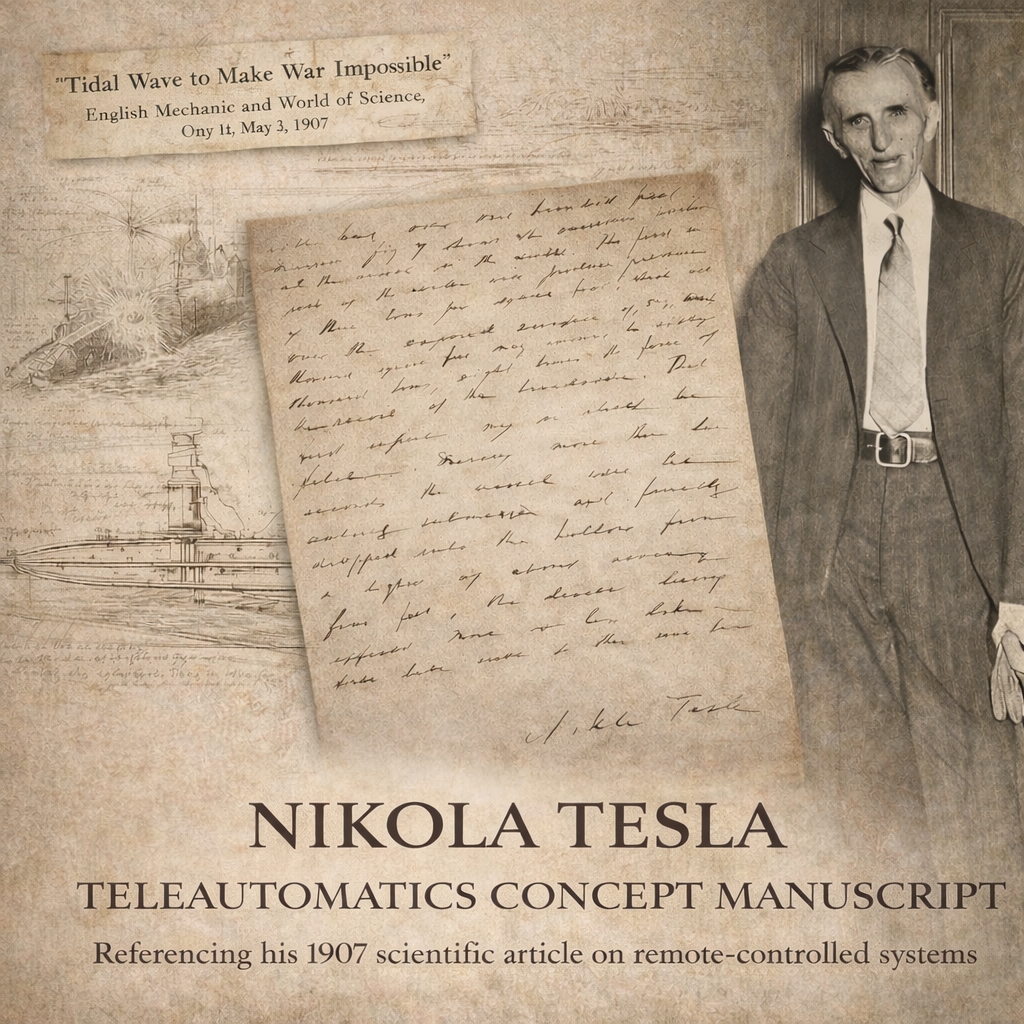
Nikola Tesla signed holograph manuscript page from “Tidal Wave to Make War Impossible,” an article he authored that was published in English Mechanic and World of Science in May 1907.
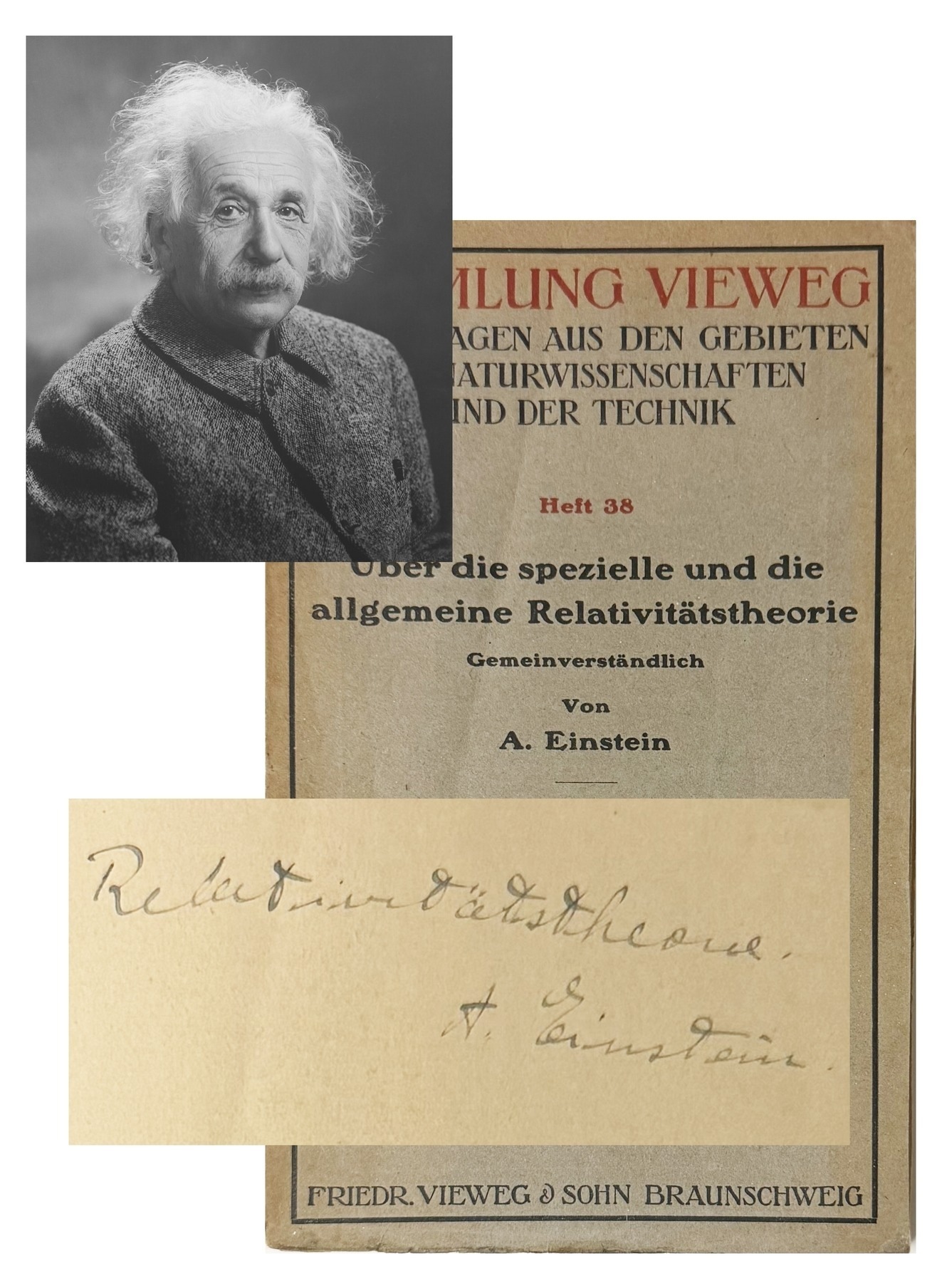
Albert Einstein signed and inscribed copy of his book Relativitätstheorie (1920), in original wrappers. The inscription reads, ‘Relativitätstheorie. / A. Einstein.,’ penned in Einstein’s hand.
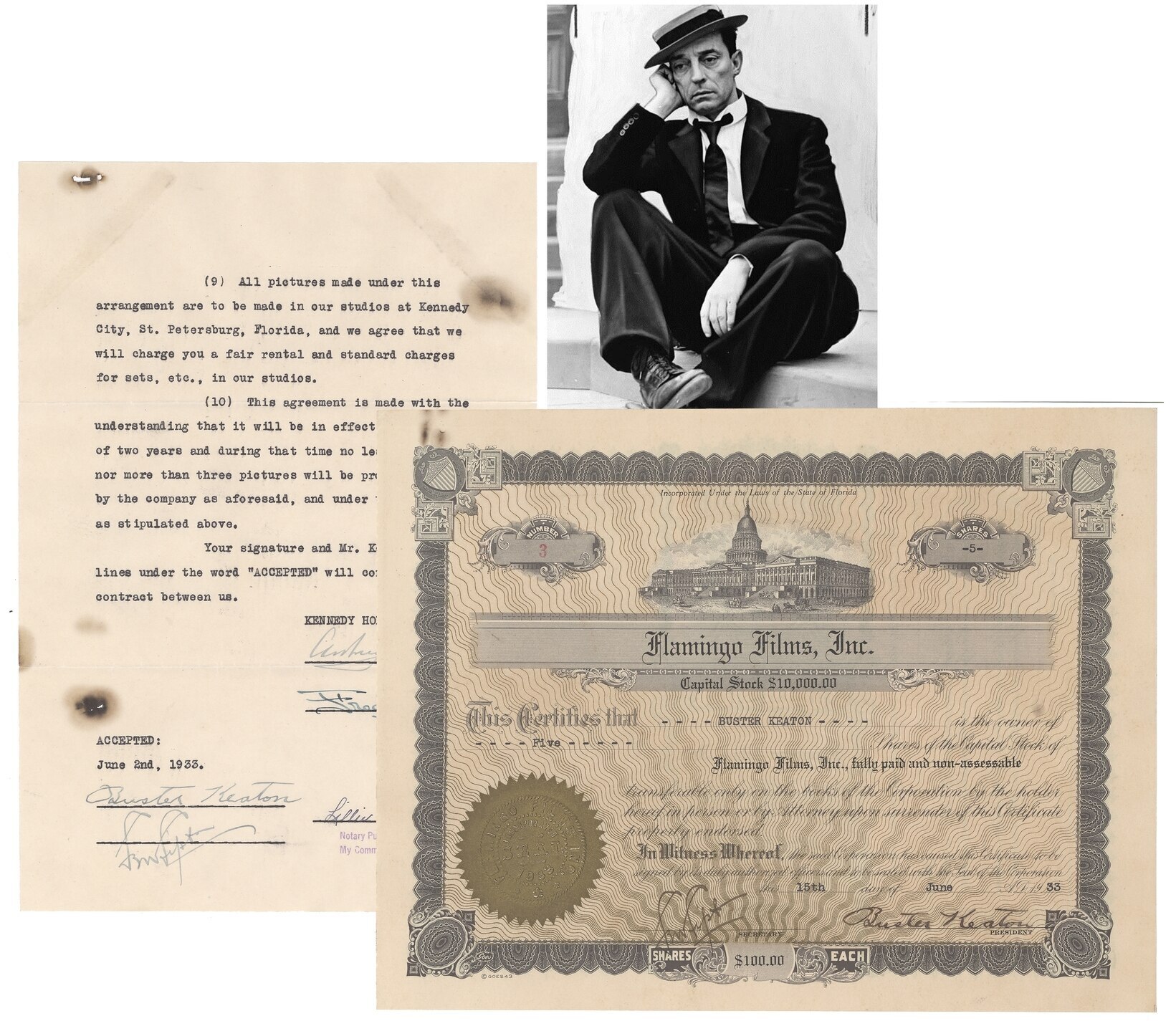
Archive of typed agreements, corporate documents, and financial material tied to comedian Buster Keaton’s early 1930s failed film production efforts in Florida.
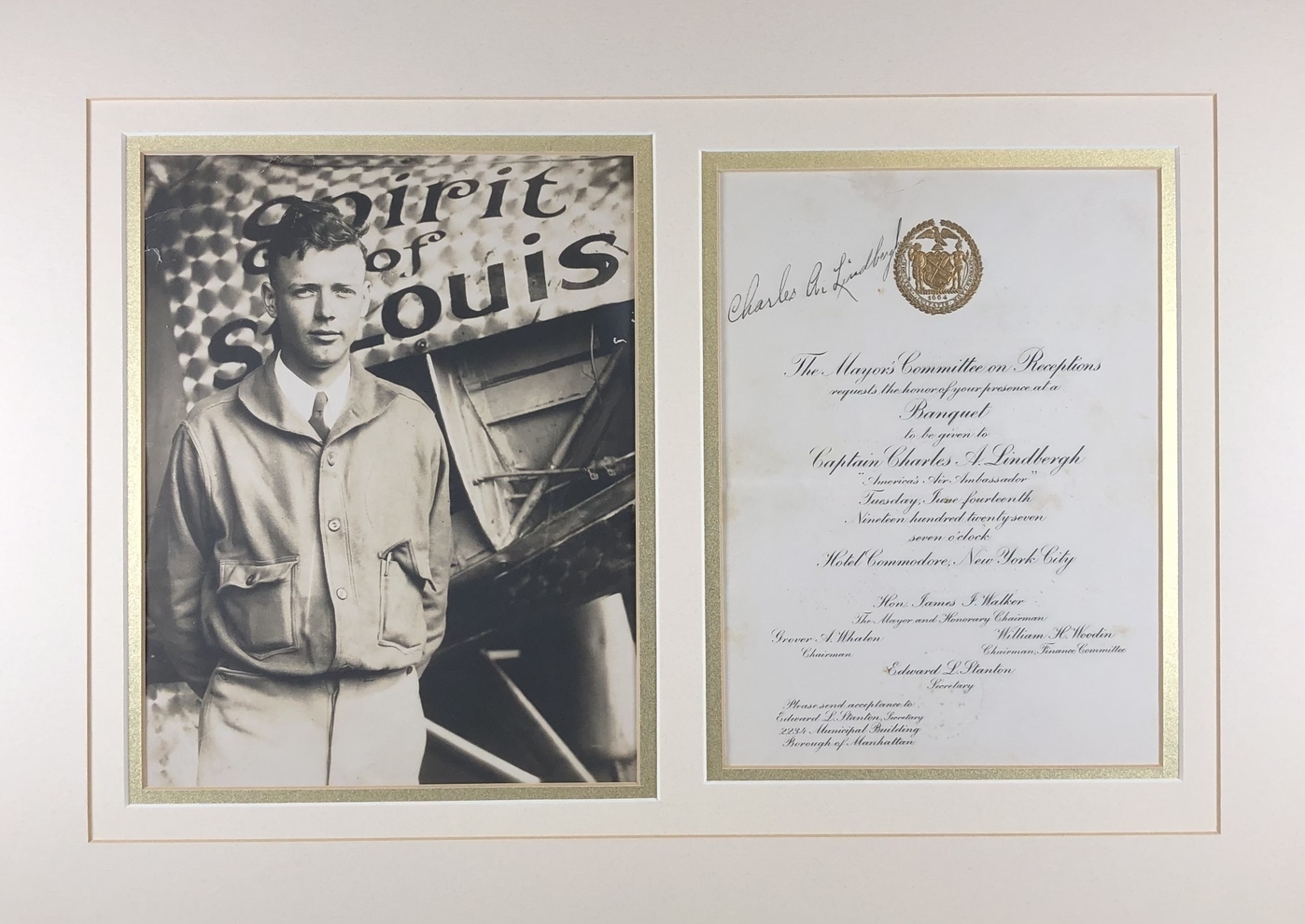
New York City mayoral banquet invitation signed by aviation pioneer Charles Lindbergh, dated June 14, 1927, just three weeks after his historic solo trans-Atlantic flight.
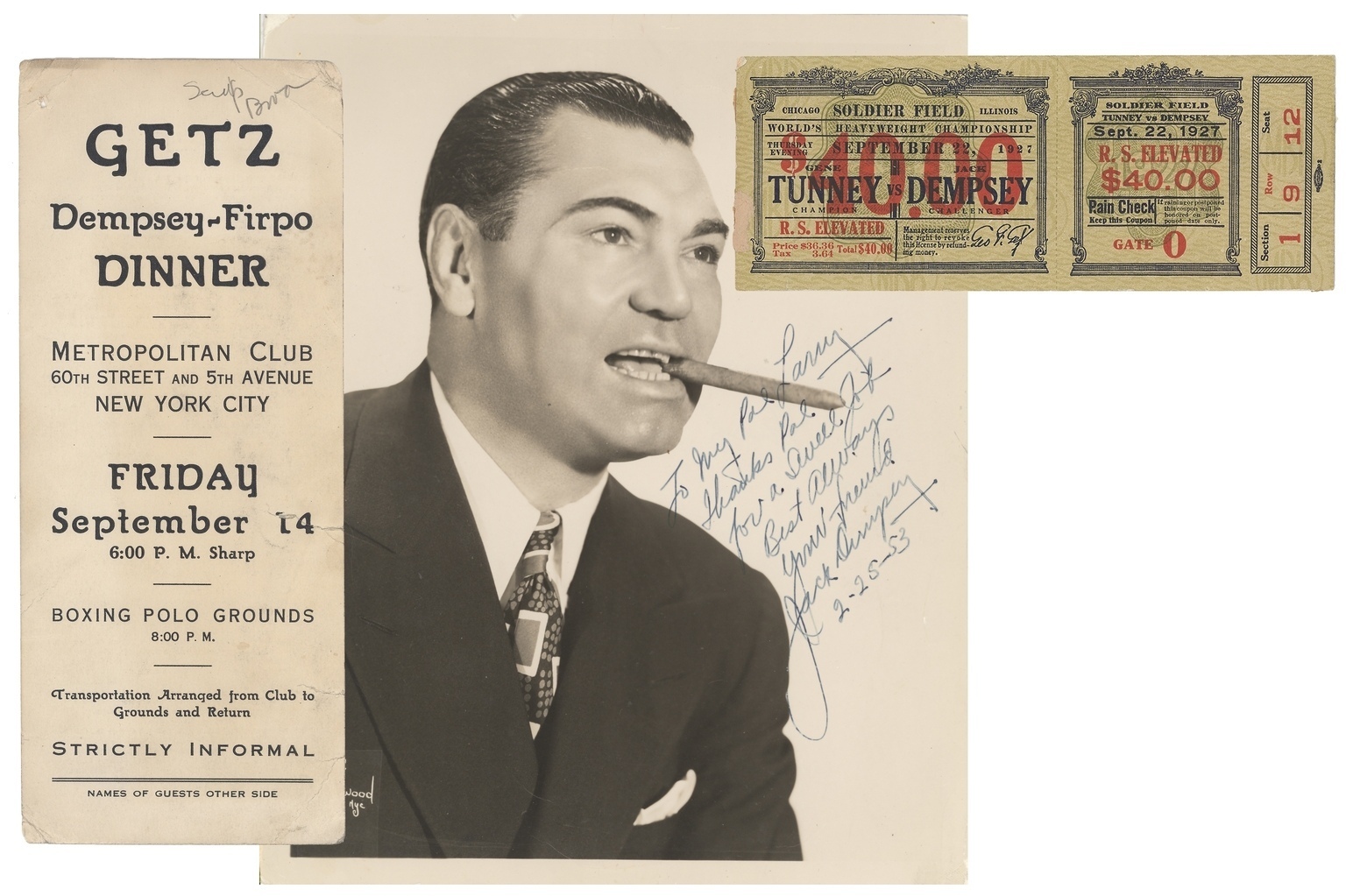
Complete 1927 Gene Tunney-Jack Dempsey “Long Count” fight ticket signed by George Getz, along with a 1923 Dempsey-Firpo dinner card and a Jack Dempsey signed autograph.
In the manuscript, Tesla gives a bold vision of a world where warfare is rendered virtually obsolete. A book written and signed by Einstein is also up for bid.
Officially titled Tesla, Einstein & the American Presidency: Rare Autographs & Historical Documents, the auction showcases an exceptional array of scientific, presidential, literary and aviation material spanning centuries of American and international history. Offerings in the catalog pertain to items signed by some of history’s brightest luminaries, including Tesla, Albert Einstein, Charles Lindbergh, numerous past US Presidents and Declaration signers.
The Nikola Tesla signed manuscript is arguably one of the most audacious weapons concepts ever committed to paper. It is the concluding page of Tesla's working draft for "Tidal Wave to Make War Impossible," an article he authored that was published in English Mechanic and World of Science on May 3, 1907. Tesla autograph letters and manuscripts are extremely rare.
Tesla describes, in precise engineering terms, a remotely operated vessel weaponized to harness the destructive force of ocean swells against an enemy fleet. The concept was not metaphorical: Tesla calculated that wave action could drive a submerged vessel downward from a height of 75 feet in something approximating free fall, generating an impact force of 60,000 tons against the hull of a warship.
That force, he wrote, was eight times the recoil of the broadside of any battleship then afloat. The vessel, once committed, would sink beneath the surface, never to rise. The weapon was to be guided entirely by remote wireless control: no crew, no pilot, no human presence aboard. It was, in the clearest possible terms, the world's first conceived remotely operated weapon of mass naval destruction, designed more than a century before such systems became reality.
Tesla signed the page in full, "Nikola Tesla," directly below the final sentence, as though formally sealing the argument. The 1907 article was a direct response to the naval arms race then convulsing Europe, published at the moment Britain had just launched HMS Dreadnought and nations were pouring treasure into ever-larger battleships. Tesla's argument was characteristically sweeping: that his telautomaton technology rendered the capital ship obsolete and that remote-controlled tidal wave generators would make war itself impossible.
Unfortunately, the manuscript page is where those ideas reached their written endpoint. The accompanying original period photo, a large-format silver gelatin print depicting an elderly Tesla standing in a corridor, hat and cane in hand, bears a penciled annotation, "16x20 left," while the manuscript page itself is annotated "16x20 right" in the same hand, confirming the two were archived and catalogued together as a matched pair by a prior keeper of the material.
“In more than twenty years of watching the market, I have never seen a Tesla scientific manuscript page come to auction,” said David Gindy of One of a Kind Collectibles. “This is the concluding page of his working draft, written in his own hand, describing what is essentially the world's first conceived remotely operated weapon, a precursor to modern drone warfare by over a century. It is, to the best of my knowledge, unique.” It is lot #1 in the auction.
The very next item – lot #2 – is an Albert Einstein signed and inscribed copy of his book Relativitätstheorie (1920), one of the most consequential scientific books of the 20th Century, in original wrappers. “What makes this extraordinary is the inscription itself,” Gindy said. “Einstein wrote ‘Relativitätstheorie. / A. Einstein,’ naming his own theory in his hand above his signature. In all my years handling Einstein material, I have never seen him sign with that salutation. It may well be unique.”
Lot #3 is a spectacular, extra-illustrated two-volume first edition of Rufus Wilmot Griswold's The Republican Court; or, American Society in the Days of Washington (New York: D. Appleton & Co., 1855). The lavishly bound set is inlaid with original autographs, documents and period engravings of the Founding Generation. Contained within are the signatures of George Washington, (signers) Thomas Jefferson, Benjamin Harrison, John Dickinson, Charles Carroll of Carrollton and others. The volumes have been magnificently rebound in deep midnight-blue full morocco leather, with gilt page edges throughout.
Lot #5 is an autograph letter signed by William Livingston, a Declaration signer, as Governor of New Jersey, dated Jan. 3, 1788. The historically significant communication announces that the State Convention of New Jersey has unanimously ratified the federal Constitution. It’s addressed to “His Excellency Governor Collins” and measures 7 ¼ inches by 8 ¾ inches.
Lot #6 is James Joyce’s personal first edition copy of his book, Finnegans Wake, signed by the author and still in the original first-issue dust jacket, with “First Regular Edition, $5.00” printed on the front flap. The 628-page first American edition trade issue book was published in the month of its first appearance in 1939 (New York: The Viking Press). The book is housed in a custom folding cloth box with morocco spine label.
Lot #197 is a complete 1927 Gene Tunney-Jack Dempsey “Long Count” fight ticket signed by George Getz, along with a 1923 Dempsey-Firpo dinner card and a Jack Dempsey signed autograph. The second Tunney-Dempsey contest at Soldier Field, Chicago, on September 22, 1927 will be forever known as the "Long Count" fight. It drew over 100,000 spectators and generated a gate that would not be surpassed for decades. Complete tickets from this bout, intact with stub, are very scarce.
Lot #4 is an archive of typed agreements, corporate documents, and financial material directly tied to comedian Buster Keaton’s early 1930s independent film production efforts in Florida, including his association with Aubrey Kennedy and the formation of short-lived Flamingo Films, Inc. Included is a typed contract dated June 2, 1933, between Kennedy Holding Corporation and Keaton, boldly signed “Buster Keaton,” and an original stock certificate for Flamingo Films, Inc., dated June 15, 1933, issued to Keaton and signed by him as president. The Florida climate proved to be unfriendly to the ways of 1930s-era filmmaking.
Lot #7 consist of two fantastic pieces: a rare Josiah Henson autograph of the author, abolitionist and minister (1789-1883), who fled from slavery and founded a settlement for fellow fugitive slaves in Ontario, believed to have inspired the title character of Harriet Beecher Stowe's influential 1852 novel Uncle Tom's Cabin; and an original vintage 4.25 x 6.5 cabinet photo of Harriet Beecher Stowe in profile, signed in the lower border in black ink with an inscription to Plymouth Sunday School, taken by photographer George Hastings in the late 1880s.
Lot #109 is a New York City mayoral banquet invitation signed by aviation pioneer Charles Lindbergh, dated June 14, 1927, just three weeks after his historic solo trans-Atlantic flight. The invitation by the Mayors Committee on Receptions requests Lindbergh’s presence and has a clear and large autograph at the top left of the page in black ink. The invitation is matted with a photograph taken of him in front of his plane "Spirit of St. Louis."
Lot #10 is an autograph album signed by former US President James Buchanan, all the members of his Cabinet, and other US government leaders – 44 signatures in all, gathered in Washington, D.C. between 1857-1859. The album contains 22 sheets measuring 8 inches by 6 ½ inches. It’s in overall VG condition and comes with a One of a Kind Collectibles Certificate of Authenticity.
Also up for bid will be colonial treasures, including a Roger Sherman triple-signature on a 1756 counterfeit prosecution; aviation, including Orville Wright and a Lindbergh TLS; space highlights, to include Apollo astronauts Shepard, Aldrin and Collins, plus Gargarin; literary lots, including Mark Twain and Charles Dickens; and sports items, like Yankees and Joe DiMaggio.
One of a Kind Collectibles Auction was founded in 1994. The firm is dedicated to autographs, art, documents, philatelic, coins, currency and fine collectibles. To receive a free catalog, call 1-800-570-7273, or fill out the form that’s on the company website: www.OAKauctions.com.
One of a Kind Collectibles Auction is always accepting quality consignments for future auctions. To consign a single piece or an entire collection, you may call toll-free, 800-570-7273, or e-mail to consign@oneofakindauctions.com. They offer quick turnaround and immediate cash options. To learn more, or to register and bid now for the April 30th auction, please visit www.OAKauctions.com.
# # # #
David Gindy
One of a Kind Collectibles Auction
+1 800-570-7273
email us here
Legal Disclaimer:
EIN Presswire provides this news content "as is" without warranty of any kind. We do not accept any responsibility or liability for the accuracy, content, images, videos, licenses, completeness, legality, or reliability of the information contained in this article. If you have any complaints or copyright issues related to this article, kindly contact the author above.
